

Here for support
Infidelity changes the relationship. Repair changes it again.
Infidelity is rarely as simple as someone cheated because something was missing in their marriage.
Understanding why an affair happened is not the same thing as excusing it.
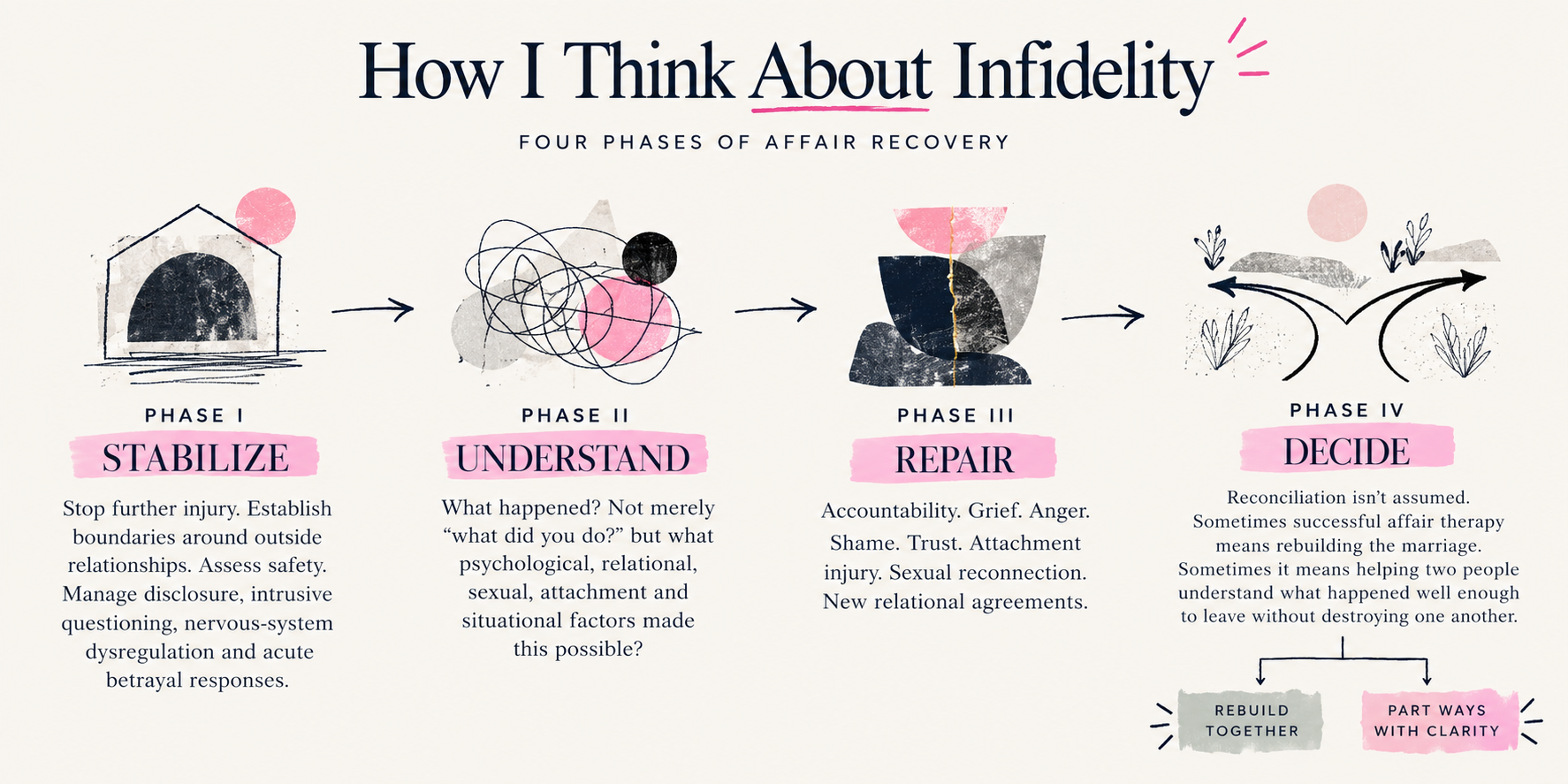
I approach infidelity as both a betrayal injury and something that happened within a larger human system. There is the affair itself—and then there are the attachment patterns, sexual dynamics, individual histories, opportunities, unmet or unspoken needs, avoidance, shame, boundaries, beliefs, and choices each of you make around all of it.
Understanding that system helps us answer a question couples often ask: How did we get here?
Repair begins differently.
In the beginning, the work is less about fixing the relationship and more about stopping the bleeding. We slow things down, establish safety, make room for anger and grief, work with the nervous system, determine what information needs to be known, and help both partners survive conversations that can otherwise become circular or destructive.
From there, we begin making meaning. We look honestly at what happened and which of the patterns in your relationship supported the affair. Accountability matters, and so does curiosity. As does learning the difference between understanding a behavior and absolving someone of responsibility.
Eventually, the work becomes less about returning to the relationship you had and more about deciding what kind of relationship—if any—you want to build from here.
In my work with couples, I use attachment-based therapy, sex therapy, and trauma training alongside practical tools. These tools are either borrowed from multiple experts in this field after proving they are highly effective or I have created the tool over time due to my own learning of what works for couples healing from serious breaks in trust.
Depending on where you are in the process, that tool might help you structure conversations about the affair, a timeline for the infidelity, exercises for understanding the push-and-pull that often develops after discovery, tools for rebuilding sexual and emotional safety, and frameworks for helping heal betrayal trauma through neuroscience.
Some of those tools live on this page.
Common Questions after Infidelity
Why did this particular person become vulnerable to an affair?
Why now? Why this person?
What is trickle truth-ing?
What happened to the relationship after discovery?
Why does the betrayed partner keep asking the same questions?
Why does the involved partner become defensive or shut down?
When is disclosure useful versus destabilizing?
What happens to sex after betrayal?
How do shame and accountability differ?
When is an affair part of OCSB versus something else entirely?
When should a couple not reconcile?
Advanced Resources

The Brightline Project →
The First 30-Days Post Discovery Field Guide
For the Betrayed Partner
For the Betrayer
Recommended“Their attention to detail and commitment to quality truly stood out. We’ve already recommended them to others.”
– Former Customer
Get In Touch
If you're interested in working with us, complete the form with a few details about your project. We'll review your message and get back to you within 48 hours.